RFID Violation Penalties Philippines 2026: Complete Fine Guide (₱1,000 to ₱5,000 Rules Explained)
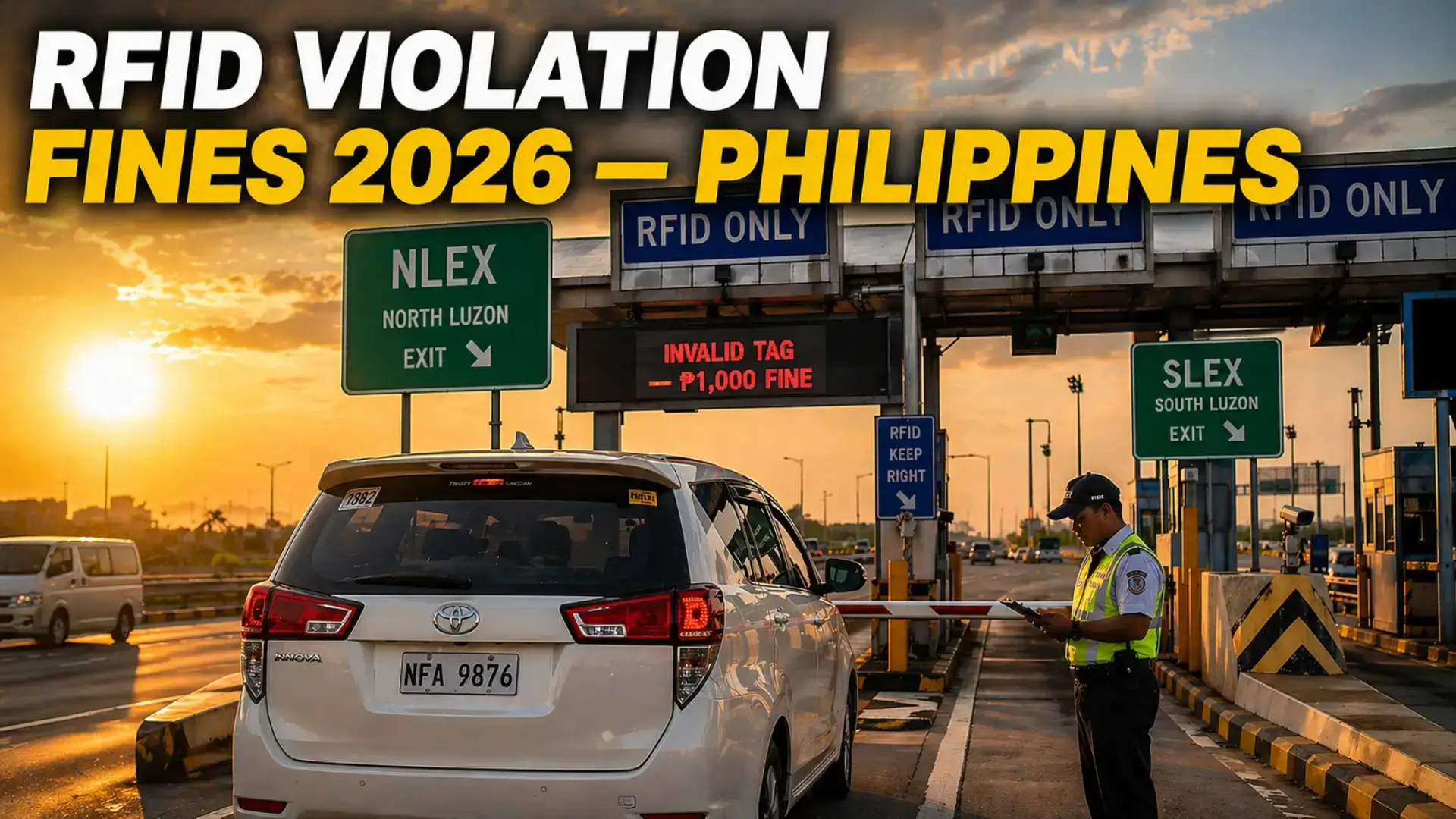
In 2026, driving on Philippine expressways without a valid RFID tag costs ₱1,000 for a first offense, rising to ₱5,000 for repeat violations. An insufficient RFID balance triggers a ₱200 penalty plus a mandatory ₱500 minimum reload.
This guide covers every RFID violation penalties fine, the three-strike rule, and exactly how to stay compliant, so you never get caught off guard at a toll plaza again.
What Are the RFID Violation Fines in the Philippines?
Here’s the thing most drivers do not fully understand: there are actually three separate types of RFID violations on Philippine expressways, and each carries its own fine.
They are not the same. Knowing which one applies to your situation matters, especially because the fines escalate fast.
Fine for No RFID Tag at Expressway Entry
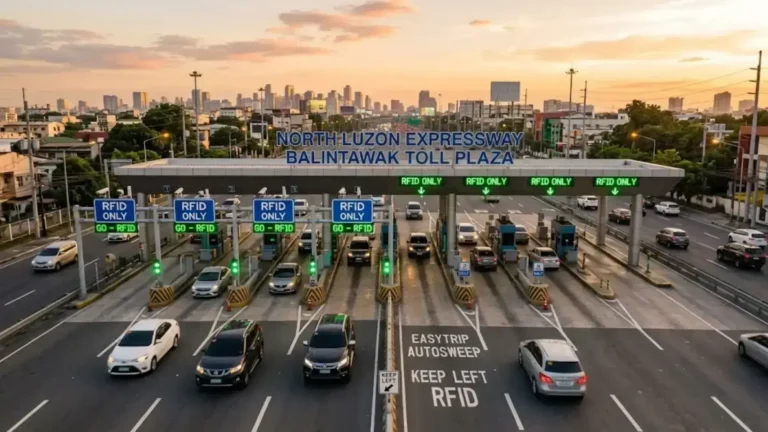
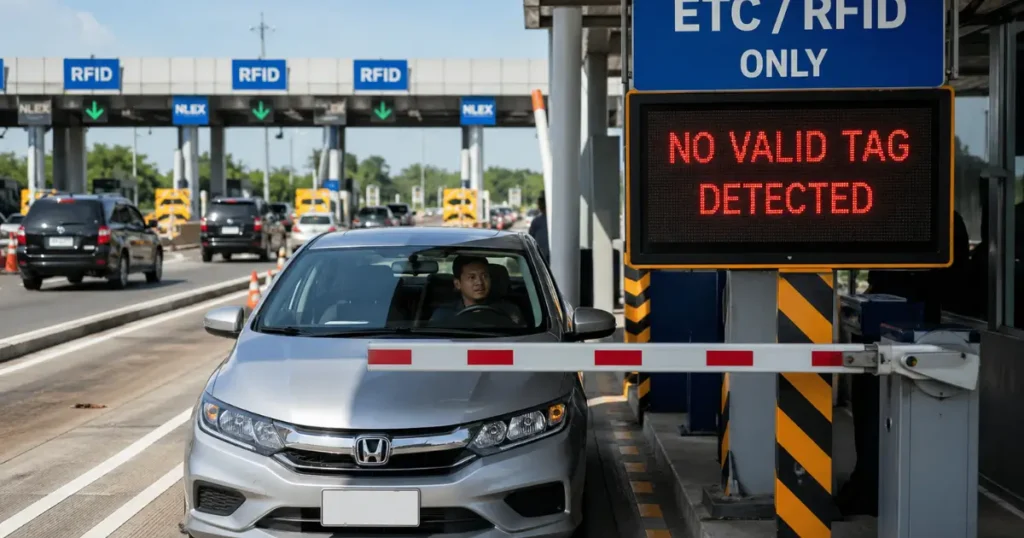
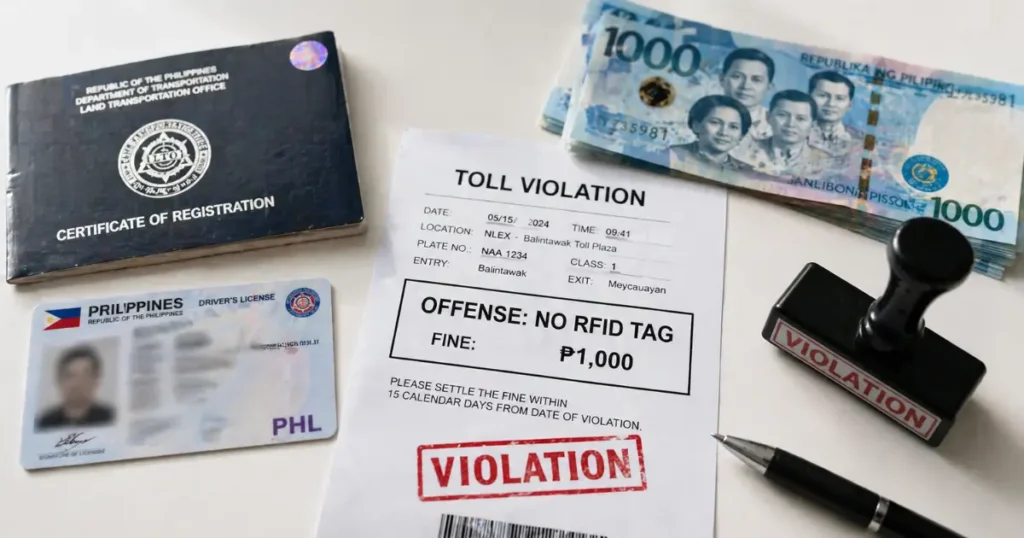
If you use an RFID lane without a valid registered tag, you are looking at an immediate ₱1,000 fine, plus you still have to pay the toll manually on top of that.
This applies whether you have no sticker at all or your sticker isn’t registered and active. The Toll Regulatory Board (TRB) classifies this as disregarding toll plaza traffic signs under DOTr Joint Administrative Order 2014-01.
Think of it this way: the signage above the lane is clear. If you roll into an ETC lane without a working tag, that’s your violation right there.
This fine covers all 13 Philippine expressways under TRB jurisdiction, including NLEX, SLEX, Skyway Stage 3, CAVITEX, CALAX, SCTEX, TPLEX, NAIAX, MCX, and STAR Tollway.
Fine for Insufficient RFID Balance
This one catches a lot of regular commuters by surprise.
If your RFID sticker is active but your balance runs out at the toll barrier, you get hit with a ₱200 penalty on top of the toll amount owed. The barrier won’t lift. You also can’t exit until you reload a minimum of ₱500.
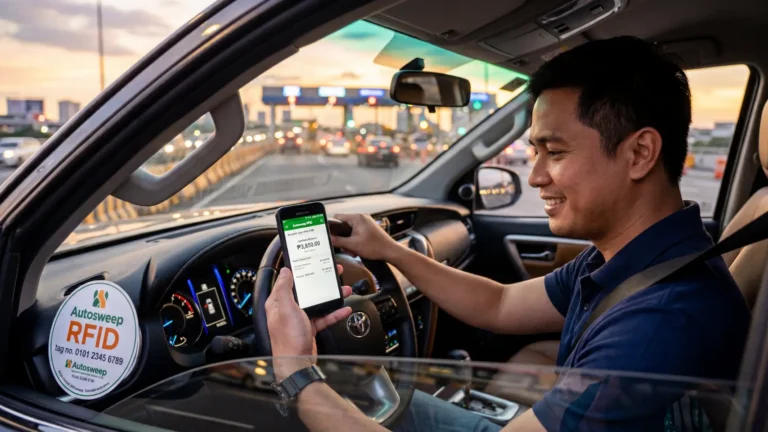
That’s a frustrating situation, especially during rush hour on SLEX or NLEX with a line forming behind you.Always check your balance before long trips. Both the Autosweep RFID app and the Easytrip Services app send low-balance alerts when your account drops below ₱100.
| Violation | Fine | Additional Requirement |
|---|---|---|
| No RFID tag (1st offense) | ₱1,000 | Pay toll manually |
| No RFID tag (2nd offense) | ₱2,000 | — |
| No RFID tag (3rd+ offense) | ₱5,000 | Possible access suspension |
| Insufficient RFID balance | ₱200 + toll amount | ₱500 minimum reload required |
| 3+ violations within 30 days | ₱5,000 | Expressway access may be suspended |
The Three-Strike Rule: Escalating Fines for Repeat Violations
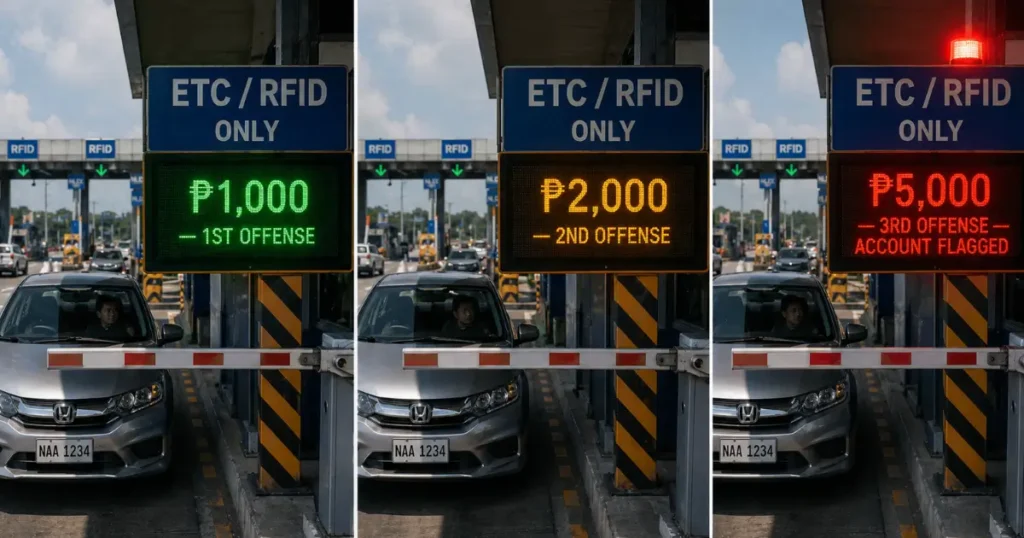
Most people know about the ₱1,000 fine. Far fewer know what happens when you keep getting flagged.
The three-strike rule is real, and it’s enforced.
How the Three-Strike System Works
The penalty structure scales with each offense:
- 1st offense: ₱1,000 fine
- 2nd offense: ₱2,000 fine
- 3rd offense and beyond: ₱5,000 fine
Three or more RFID violations within a 30-day window puts you in the maximum penalty tier automatically. That’s the equivalent of a brand-new driver’s license renewal fee, gone, just from skipping RFID reloads.
This escalation policy was built into Joint Memorandum Circular 2024-001 (JMC 2024-001), jointly issued by the Department of Transportation (DOTr) and the Toll Regulatory Board (TRB).
Can You Be Banned from Expressways for RFID Violations?
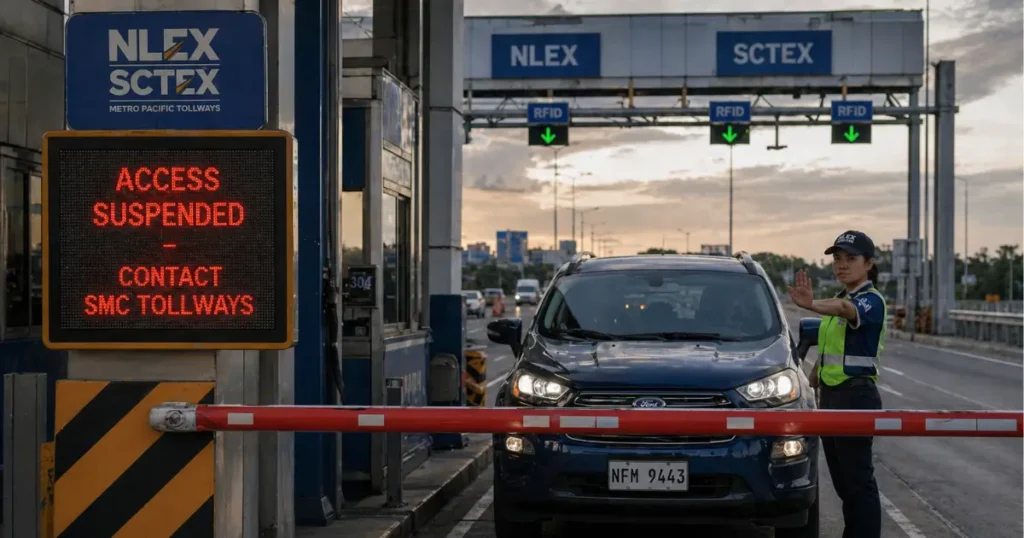
Yes. This is not a scare tactic. It is written into the rules.
Motorists who rack up 3 or more violations within 30 days risk suspension of expressway access privileges. That means you could be barred from entering SLEX, Skyway, NLEX, and other major tollways, not just fined.
Enforcement is handled by SMC Tollways (which operates the Autosweep system) and Metro Pacific Tollways Corporation (MPTC) (which runs Easytrip). Both operators have the authority to flag accounts and restrict access in coordination with the TRB.
For daily commuters who depend on expressways to get to work, that’s a serious consequence. Don’t let it get there.
RFID Mandatory Policy: When Did It Take Effect?
If you’ve been on the expressway recently and noticed no cash lanes at certain plazas, that’s not an accident.
“No Valid ETC Device, No Entry”: The March 15, 2025 Policy
Starting March 15, 2025, RFID became mandatory for regular expressway users under the “No Valid ETC Device, No Entry” policy, issued under a DOTr Department Order.
Regular users, meaning anyone who drives on expressways frequently, are required to have a working RFID tag. Cash lanes are still available, but only for occasional or non-regular users. If you’re on the tollway daily or even weekly, you’re expected to have an RFID.
This 2026 guide reflects the enforcement reality nearly a year after that policy took effect. The fines are active. The system is live.
JMC 2024-001: The Regulation Behind the Fines
JMC 2024-001 is the Joint Memorandum Circular that defines the actual penalty framework: who gets fined, how much, and under what conditions.
It was originally supposed to take effect in August 2024, then pushed to October 2024, and finally enforced in early 2025 after the DOTr announced a delay in September 2024. The delays gave tollway operators and motorists more time to prepare.
As of 2026, enforcement is no longer tentative. The regulation is in full effect across all expressways.
Autosweep vs Easytrip: Which Expressways Apply Which Fines?
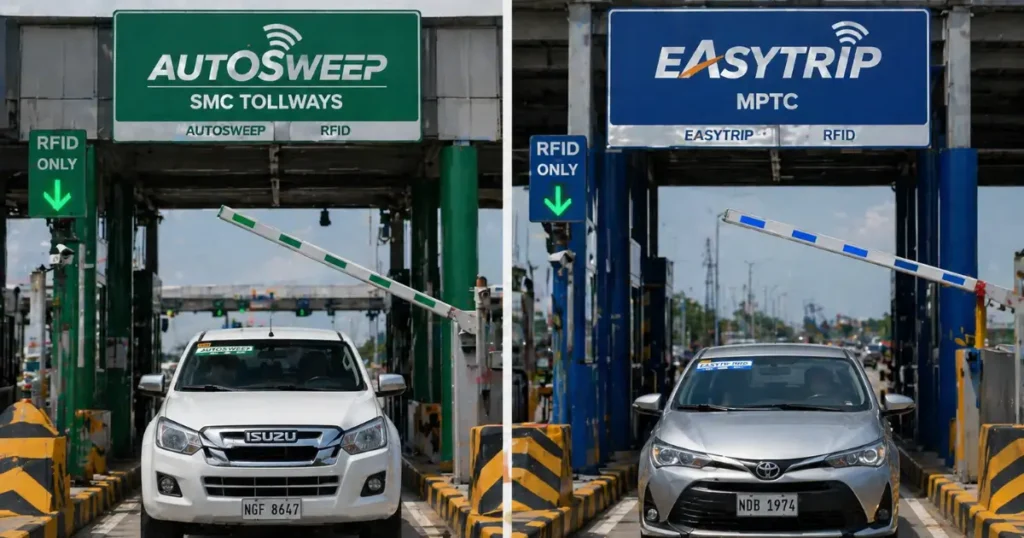
Here’s something a lot of drivers still get confused about: Autosweep and Easytrip are two separate RFID systems, and they cover different expressways. Using the wrong one, or having only one when you need both, can still get you fined.
Autosweep RFID: Expressways and Penalty Zones
Autosweep is operated by SMC Tollways, a subsidiary of San Miguel Corporation. It covers:
- SLEX (South Luzon Expressway)
- Skyway and Skyway Stage 3
- STAR Tollway (Southern Tagalog Arterial Road)
- NAIAX (NAIA Expressway)
- MCX (Muntinlupa-Cavite Expressway)
- TPLEX (Tarlac-Pangasinan-La Union Expressway)
Balance check and support: Autosweep RFID app, website at autosweep.ph, or hotline (02) 8655-7987.
Easytrip RFID: Expressways and Penalty Zones
Easytrip is managed by Metro Pacific Tollways Corporation (MPTC). It covers:
- NLEX (North Luzon Expressway)
- SCTEX (Subic-Clark-Tarlac Expressway)
- CAVITEX (Manila-Cavite Expressway, MPTC section)
- CALAX (Cavite-Laguna Expressway)
- NLEX Connector Road and Harbor Link
- C5 Link
Balance check and support: Easytrip Services app or MPT DriveHub app, website at easytrip.ph, or hotline (02) 8888-3279.
Do You Need Both RFID Systems in 2026?
Most people miss this.
As of early 2026, Autosweep and Easytrip remain largely separate. Despite years of government directives and multiple target dates from the DOTr and TRB, full interoperability is still incomplete for many users.
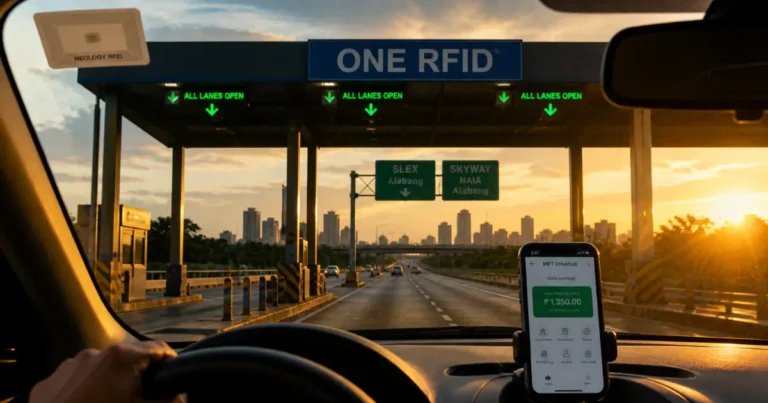
If you regularly drive on both the southern (SLEX, Skyway) and northern (NLEX, SCTEX) expressways, you need two RFID stickers and two separate accounts. Miss a reload on one, and you’re still liable for a violation, even if your other account has plenty of load.
The DOTr and TRB are continuing to work toward a single unified system, but there is no confirmed completion date as of this writing.
How to Check Your RFID Balance and Avoid Penalties
The single most effective way to avoid RFID fines? Check your balance before you drive. It takes 30 seconds and saves you hundreds of pesos.
How to Check Autosweep Balance
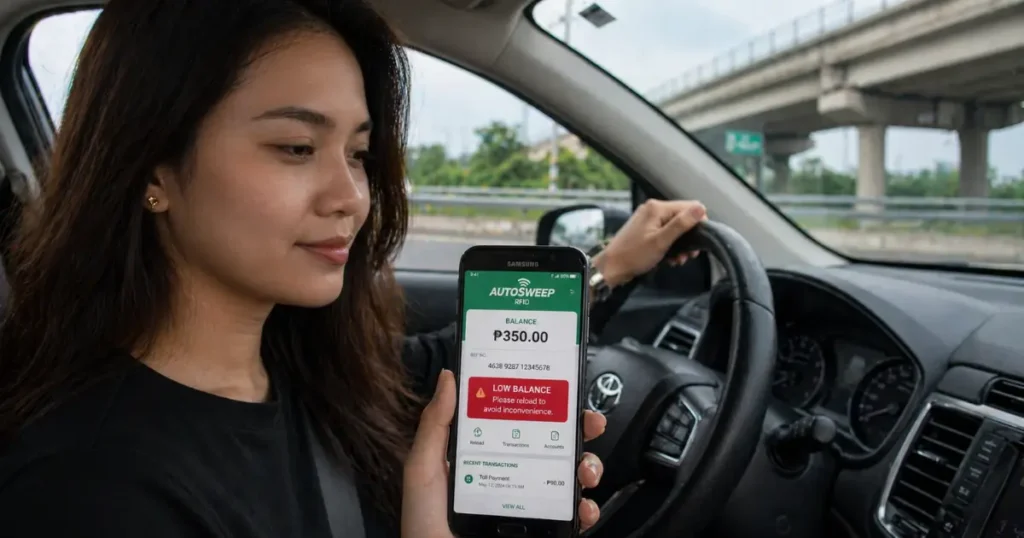
If you want to check your autosweep Balance, please check it out here
How to Check Easytrip Balance
Via mobile app:
- Download the Easytrip Services app or MPT DriveHub app
- Log in and view your balance on the dashboard
Via website: Visit easytrip.ph and access your account.
Via SMS: Text BAL [Easytrip account number] and send to 0919-160-1553 (₱1 per text).
Same as Autosweep, the app notifies you when your balance falls below ₱100.
How to Reload RFID Quickly Before a Trip
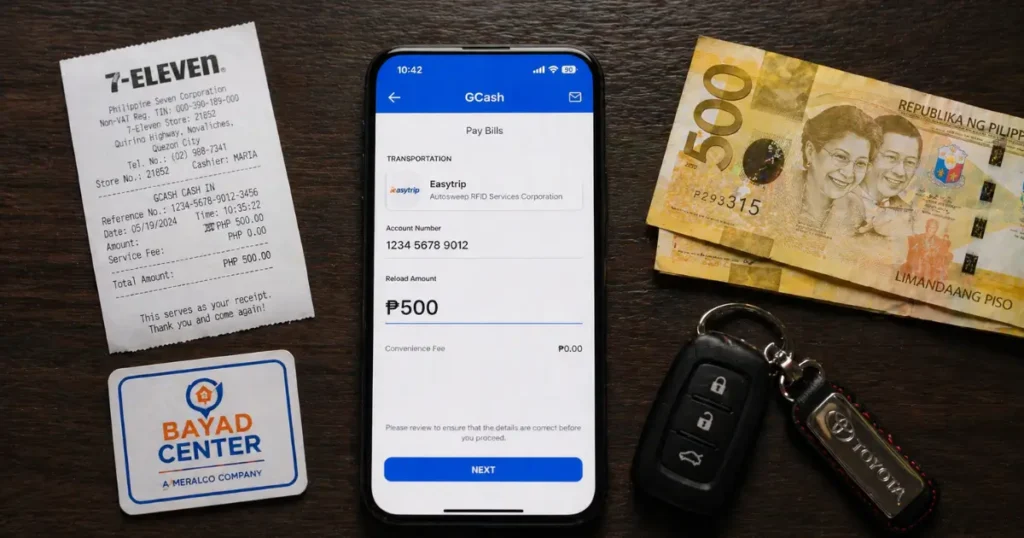
You do not need to visit an expressway station to reload. Here are the fastest options:
- GCash — ₱12 flat fee for Easytrip, ₱10 flat fee for Autosweep (open GCash app, go to Bills, select Transportation)
- 7-Eleven — Over-the-counter reload, available 24/7
- Bayad Center — Accepts both systems
- SM and Robinsons Business Service Centers
- Shell and Petron gas stations
- Online banking via enrolled bank partners
Per JMC 2024-001, operators are required to reflect reloads in real-time on their account management systems. If you reload and it doesn’t show immediately, contact your operator’s hotline right away.
RFID Sticker Requirements to Avoid Violations
Having an RFID account isn’t enough if the sticker itself is causing read failures. This is a commonly overlooked issue.
Proper Windshield Placement Rules
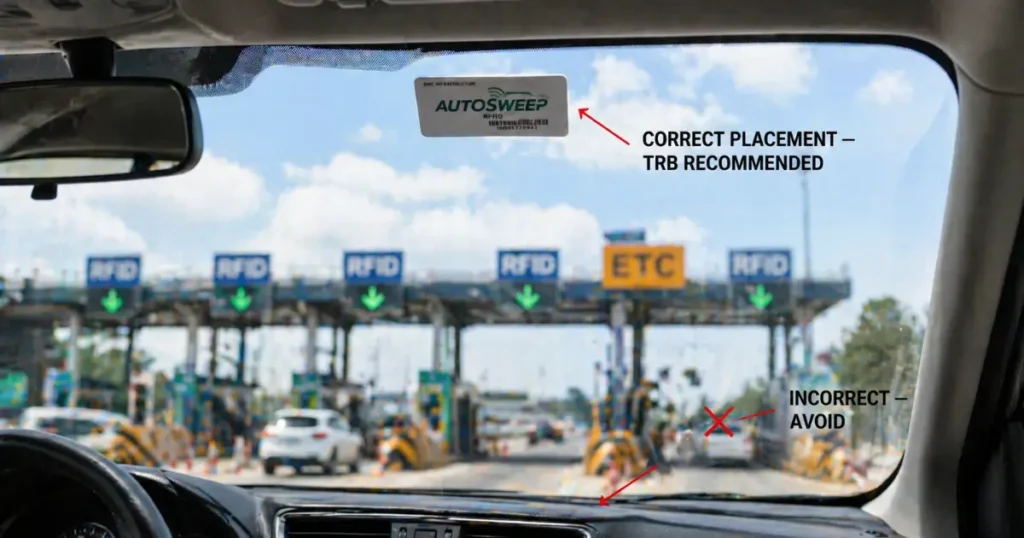
The TRB recommends placing your RFID sticker at the non-tinted, top-middle portion of the vehicle’s windshield interior. This location gives the antenna the clearest read and protects the sticker from direct sun, rain, and wiper damage.
If it is placed incorrectly, the toll antenna may not read it, which triggers a “no valid tag” violation, even if you have a fully loaded account.
Do not place the sticker on the exterior of the windshield. Avoid pointing pressure washers directly at it during car washes. The TRB has also moved to ban RFID placement on headlights due to high damage rates, so if yours is on the headlight, visit your provider to have it properly reinstalled.
Installation at an authorized outlet takes 10 to 15 minutes under normal conditions, up to 20 to 30 minutes during peak periods like Holy Week.
RFID Installation for Motorcycles
Motorcycles are not exempt from the RFID requirement.
All motorcycles on Philippine expressways must have a functional RFID sticker installed. Combine a missing or malfunctioning RFID with a displacement below 400cc (prohibited under LTO Administrative Order 2008-15), and you are looking at fines of ₱1,000 to ₱5,000 plus a possible 3-month license suspension for repeat violations under LTO Memorandum Circular VDM-2023-2696.
For riders, checking your sticker placement before every trip is non-negotiable.
How to Pay RFID Violation Fines in the Philippines
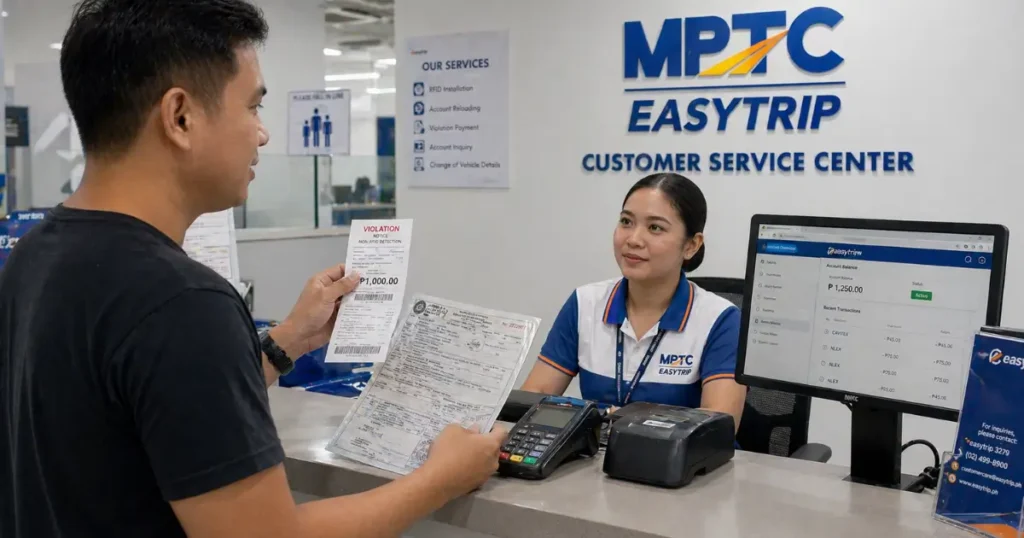
Getting a violation notice is stressful. But the payment process is straightforward if you know the steps.
Step-by-Step: Paying an RFID Violation Fine
- Receive your citation — from a toll plaza enforcer or a toll violation notice from the expressway operator
- Note your citation or reference number — tied to your vehicle plate and account
- Visit the relevant operator’s office or accredited payment center — MPTC offices for Easytrip violations, SMC Tollways for Autosweep violations
- Present your vehicle details and citation reference
- Pay the applicable fine — ₱1,000 / ₱2,000 / ₱5,000 depending on offense level
- Get your official receipt — keep this for LTO-related processes later
Some violations can also be addressed through the LTO Portal at portal.lto.gov.ph if they’ve been flagged in the national system. The portal accepts payment via GCash and credit card.
Can RFID Violations Affect Your LTO Registration?
Yes, and this is where it gets serious.
Unpaid expressway violations can be flagged during LTO vehicle registration renewal. Under the Demerit Point System (LTO Administrative Order 2018-002), accumulated violations generate demerit points. Reaching 10 points triggers a mandatory re-orientation seminar.
Hitting 40 points within your license validity period means license revocation. Settle your violations early. The ₱1,000 fine is manageable. Blocked registration and a revoked license are not.
FAQs:
Q1: How much is the RFID fine in the Philippines in 2026?
The fine for driving on an expressway without a valid RFID tag is ₱1,000 (1st offense), ₱2,000 (2nd offense), and ₱5,000 for the 3rd offense and beyond. An insufficient RFID balance triggers a separate ₱200 penalty plus the toll amount, and you must reload a minimum ₱500 to exit.
Q2: What happens if my RFID balance runs out at a toll plaza?
You will be charged a ₱200 penalty on top of the unpaid toll amount. The barrier will not lift until you reload a minimum of ₱500. You’ll need to move to the RFID reloading lane at the plaza. This applies to both Autosweep and Easytrip expressways nationwide.
Q3: Is RFID mandatory on all Philippine expressways in 2026?
Yes. The “No Valid ETC Device, No Entry” policy took effect on March 15, 2025, making RFID mandatory for regular users across all 13 Philippine expressways. Cash lanes still exist but are reserved for occasional or non-regular expressway users only.
Q4: Do I still need two RFID accounts in 2026?
Yes. As of early 2026, Autosweep and Easytrip remain separate systems. Motorists who use both SMC Tollways (SLEX, Skyway) and MPTC expressways (NLEX, CALAX) still need two stickers and two funded accounts. Full interoperability has no confirmed completion date yet.
Q5: What is the three-strike rule for RFID violations?
The three-strike rule means fines escalate with each offense: ₱1,000 (1st), ₱2,000 (2nd), and ₱5,000 (3rd+). Three or more RFID violations within a 30-day period also triggers the maximum fine tier and may result in suspension of expressway access privileges.
Q6: How do I check my RFID balance before driving?
For Autosweep: use the Autosweep RFID app or visit autosweep.ph. For Easytrip: use the Easytrip Services app or visit easytrip.ph. Both apps send automatic low-balance alerts when your account drops below ₱100. You can reload instantly via GCash with no bank visit required.
Q7: Can I enter an expressway without an RFID sticker in 2026?
Regular expressway users cannot enter without a valid RFID tag. Vehicles without one must use the RFID Installation/Reloading lane at the entry plaza, causing delays of 5 to 10 minutes. Cash lanes remain available only for non-regular users under current TRB policy.
Q8: Can unpaid RFID fines block my LTO registration renewal?
Yes. Unpaid expressway violations can be flagged in LTO systems during registration renewal. They also generate demerit points under LTO A.O. 2018-002. Accumulating 40 points within a license validity period can result in mandatory license revocation.
Stay Compliant, Save Money
RFID violation penalties in the Philippines in 2026 are real, enforced, and expensive, especially if you let them pile up. A ₱1,000 first-offense fine stings. A ₱5,000 repeated-violation fine, combined with a possible expressway ban and flagged LTO registration, is a much bigger problem.
The fix is simple. Install a proper Autosweep or Easytrip RFID sticker (or both, if you drive north and south). Keep your balance above ₱100. Download the Autosweep RFID app or Easytrip Services app and turn on low-balance notifications.
Check your balance before every trip. Reload via GCash in under two minutes. That’s it.Don’t let a ₱200 oversight turn into a ₱5,000 violation. Visit Autosweep or easytrip.ph today to check your account and make sure you’re covered before your next drive.